_edited_edited.jpg)
Omega Constellation “Manhattan” Mini (Ref. 795.1080) — The Tiny Icon You Can Actually Wear
- Walter Ponce
- Jan 12
- 3 min read
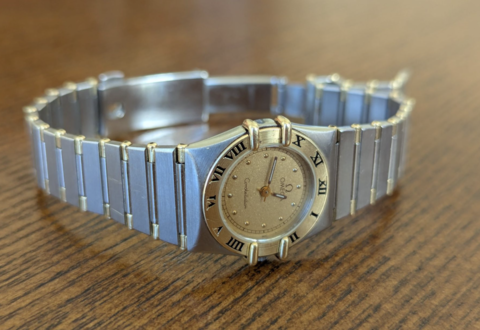
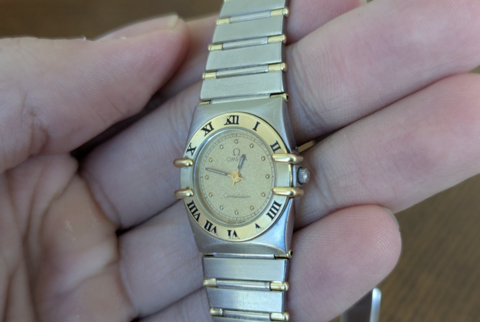
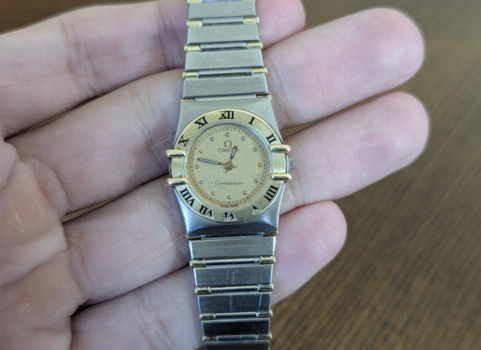
Born from the 1980s Manhattan design language—four claws, Roman-numeral bezel, and an integrated bracelet—the Omega Constellation Mini (ref. 795.1080) distills a big design story into a compact, jewelry-leaning everyday watch. It’s thin, reliable quartz, easy to style, and one of the most approachable entry points into Constellation history.
Why it’s interesting
True design DNA, small footprint: You get the Manhattan claws and integrated bracelet in a wearable ~22–23 mm package.
Quartz done right: Omega cal. 1455 (ETA 976.001) is slim, accurate, and easily supported with parts/modules.
Accessible Constellation: Prices stay sensible; maintenance is light compared to vintage mechanicals.


Key Specifications (typical)
Spec | Details |
Reference | 795.1080 (ladies “Mini” Manhattan; variants in steel or two-tone) |
Movement | Omega 1455 (ETA 976.001 base), quartz, 6 jewels |
Functions | Hours, minutes (two-hand; no date, no seconds typical) |
Case | ~22–23 mm barrel/tonneau profile, claws at 3/9, Roman-numeral bezel |
Thickness | Slim quartz profile (approx. ~5 mm) |
Crystal | Sapphire |
Bracelet | Integrated, tapering; steel or steel/18k accents (two-tone) |
Battery | 321 / SR616SW |
Water resistance | Treat as dress-daily (avoid swimming; pressure test only if needed) |
Design & Variants
The Manhattan concept keeps the case front clean with four functional griffes. On the Mini, that translates to a fixed Roman-numeral bezel, applied Ω and star, and a minimalist two-hand dial (commonly white, black, or champagne). Two-tone versions add warmth and pair naturally with gold jewelry; all-steel reads cleaner and a bit more modern.
Movement & Setting Tips
Inside is cal. 1455, Omega’s finish on ETA 976.001—a thin, two-hand quartz workhorse.
Battery: 321 / SR616SW.
Service reality: Most issues are solved with a fresh cell or a drop-in module swap (parts are still obtainable).
No seconds by design: The calm dial is part of the look—and helps battery life.
How it wears
Size: At ~22–23 mm, it wears like elegant jewelry on smaller wrists and as a crisp dress accent on larger ones.
Profile: Very thin—slides under any cuff.
Styling: Two-tone pops with bracelets/rings; all-steel is minimalist and versatile. This is a dress-daily piece, not a sports watch.
Market Prices & What to Pay (2025 snapshot)
Typical runner (no box/papers): mid-hundreds to ~1,000 (currency-agnostic guideline).
What moves price: Condition, bracelet length (links!), and the two-tone premium.
Service docs: A recent, documented service adds real value.


Buying Guide: What to Check
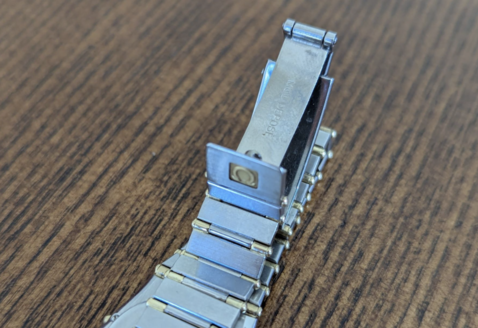
Bracelet fit: Ask for the inside length and spare links (two-tone links can be pricey/harder to source).
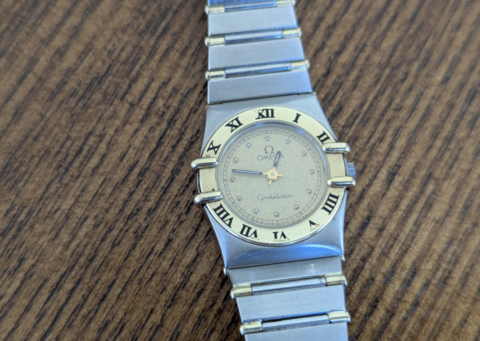
Claws & screws: All four should sit flush; chewed or misaligned screws suggest rough past work.
Dial printing: Crisp “Constellation” script and a centered star at 6; be wary of obvious re-dials.
Crown & crystal: Ω-signed crown; sapphire should be clean—chips at 3/9 can indicate claw mishandling.
Movement health: Fresh battery + short run video; repeated stops after a new cell often mean a module swap (straightforward).
Water: Treat as not for swimming unless freshly resealed and pressure-tested.
Owning & Care
Maintenance cadence: Replace battery and gaskets every couple of years; pressure-test only if you actually need water resistance.
Parts path: If a coil/IC fails, a donor ETA 976.001 or Omega-signed 1455 module is a pragmatic fix.
Use case: Office, dinners, daily dress wear. Keep it dry unless you’ve confirmed seals.

Who is it for?
Design lovers who want the Manhattan look without the bulk or cost.
Everyday wearers who value comfort, thinness, and low-maintenance ownership.
New collectors seeking an approachable Omega with real brand DNA.
Bottom Line
The Constellation “Manhattan” Mini (795.1080) is one of the easiest ways to wear a piece of Omega design history. Nail the bracelet fit, verify tidy claws/dial, and confirm a healthy quartz module—and you’ve got a compact, elegant classic that’s effortless to live with.